Implant Clinic

Who may benefit from a bone conduction implant?

A bone conduction implant may be suitable if your hearing challenges are not effectively addressed by traditional hearing aids.

This may include people with:

  • Conductive or mixed hearing loss
  • Single-sided deafness (hearing loss in one ear)
  • Chronic ear conditions affecting the outer or middle ear
  • Difficulty wearing or tolerating hearing aids
LionsHearingPalmyra_HR-81

When might this be a better option than hearing aids?

For some people, hearing aids are not the most effective solution.

This may be due to medical conditions affecting the ear canal or middle ear, chronic infections, or when sound cannot travel effectively through the ear in the usual way.

In these cases, a bone conduction implant provides an alternative by bypassing the outer and middle ear and delivering sound directly to the inner ear.

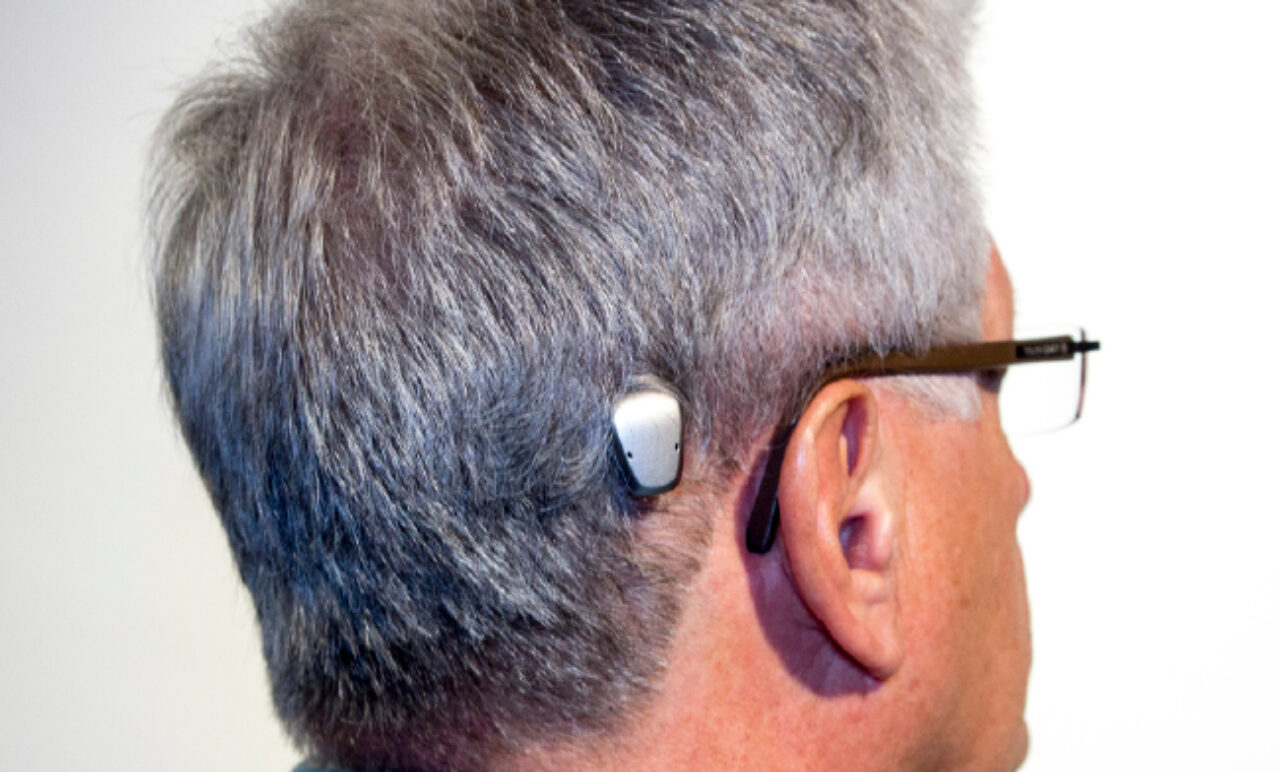
Cochlear-Implant-wearer

What is a bone conduction implant?

A bone conduction implant is a small medical device that works differently from a hearing aid.

Instead of sending sound through the ear canal, it transmits sound vibrations through the bone behind the ear directly to the inner ear (cochlea). This bypasses parts of the ear that may not be functioning effectively, allowing sound to be processed more clearly.

How it works

A bone conduction implant works by sending sound to the inner ear through vibrations, bypassing parts of the ear that may not be working effectively.

Sound is captured

The external sound processor picks up sounds from your environment.

Sound is converted to vibrations

These sounds are converted into gentle vibrations rather than amplified sound.

Vibrations travel through bone

The vibrations are transmitted through the bone behind the ear directly to the inner ear.

The brain interprets the sound

The inner ear sends signals to the brain, where they are recognised as sound.

Exploring your options

If a bone conduction implant may be suitable, your journey will begin with a comprehensive hearing assessment.

From there, our team will guide you through your options and, if appropriate, coordinate referral to a specialist ENT surgeon for further assessment.

The procedure itself is typically straightforward, and following a short recovery period, the external processor is fitted and adjusted to your hearing needs.

Throughout the process, our team will continue to support you to ensure the best possible outcome.
What's next?

Find out if a bone conduction implant is right for you

The best way to know if a bone conduction implant is suitable is through a comprehensive hearing assessment.

Take the first step by booking an assessment. Our team will guide you through your hearing, explain your options, and help you understand the most appropriate pathway forward.

Hearing assessment

Book a comprehensive hearing assessment to understand your hearing and explore whether further implant evaluation may be appropriate.
LionsHearingPalmyra_HR-106

Speak to our team

Have questions about hearing implants or the process? Our team can provide guidance and help you understand your options.
LionsHearingPalmyra_HR-54

Find your nearest clinic